Updated
Choosing a piece now? Open the exact Etsy listing alongside this guide. Use its measurements, and ask the shop for any that are missing.
Decorative shell or shell candle?
Start with how you want to use the piece. The site features listings named Atlantic Conch Shell and Atlantic Whelk Shell, plus a Black Knobbed Whelk Shell Candle listing. Check Etsy for current options. A listing name is not independent species identification, and a photograph does not confirm current availability.
- A shell for a shelf or tabletop: compare the opening, tip and underside in the actual photos. Ask how the piece rests in your intended position and whether a stand is included. Then check the shell and stand against your space.
- A shell candle for yourself or a gift: check the candle listing’s materials, any scent options, and supplied use and care instructions. Ask the seller about any missing details before deciding. The dimensions checker does not assess whether a position is suitable for a lit candle.
A question to send the seller: “I’m considering this listing for [a shelf, tabletop or gift]. Is the photographed piece the one I would receive? Could you confirm its width, depth and height in the intended position, any stand required, and any chips, repairs or care instructions I should know about?”
For a candle, also ask which materials and scent option apply to your selection. Review the shell candle buying checks and follow the Etsy listing for current options, or use the condition checklist before choosing a decorative shell. Etsy remains the place to confirm availability, delivery and checkout.
Measure the space first
Measure the usable depth of your shelf and the height beneath any shelf above it. Leave room around the shell so you can place it without balancing it on an edge. For a table display, mark out the listing dimensions on a piece of paper to see how much space it will occupy.
A close-up photograph can make a small object look large. Compare the stated length and width with your measurements rather than judging size from the photograph alone. Ask the seller about any missing dimension.
Check your display dimensions
Compare a shell’s overall dimensions with your available space. Use the same unit for every number. No measurements are saved or submitted by this checker.
Enter your measurements to check the fit. Missing a dimension? Ask the seller before relying on the result.
Changing units clears the entries rather than converting them. For a different orientation, measure and enter all three dimensions again. The checker cannot determine stability, weight support, species or safe candle spacing.
A measurement example before you choose
Suppose a display space is 30 cm wide, 20 cm deep and 25 cm high, and an imaginary shell is 18 cm wide, 12 cm deep and 15 cm high. The raw differences are 12 cm of width, 8 cm of depth and 10 cm of height. These are example measurements, not dimensions of an item for sale.
That remaining space is shared around the shell, not available on each side. Include the stand in the full outline, use the intended display orientation and check the widest points. Try a paper template before ordering; a numerical fit does not prove the shell will sit securely or leave safe clearance for a candle.
If an Etsy listing gives only length, ask the seller for width, height and a view of the base before using the checker. Do not substitute the example numbers for the actual item.
Check the fit with a paper template
Use inches or centimetres throughout. Copy these prompts into your notes, then measure the spot where you want to display the shell.
- Usable space: width ___, depth ___, height ___.
- Room to leave around the object: left ___, right ___, front ___, back ___, above ___.
- Space left for the shell: subtract the left and right margins from the width, the front and back margins from the depth, and the top margin from the height.
- Exact item in its intended display position: width ___, depth ___, height ___. Ask the seller for any missing measurement.
- Cut a paper rectangle to the item's width and depth. Place it on the shelf, check the height, and include any stand in your measurements.
A listing's tip-to-tip length alone may not describe its footprint when you turn it for display. Ask for measurements in the position you plan to use. Choose your own margins; this worksheet checks space, not stability or candle clearance. Follow the seller's candle-use instructions separately.
Worked example: a shell can fit the shelf but fail your plan
All dimensions below are illustrative. They do not describe current stock, a particular species or a tested display.
Imagine a shelf with 30 cm of clear width, 18 cm of depth and 22 cm of height. You choose 2 cm of space at the front and 2 cm at the back. Your planned depth for the arrangement is:
18 − 2 − 2 = 14 cm
A candidate shell occupies 26 cm across, 17 cm front to back and 20 cm high in the display position you want. It fits the bare 30 × 18 × 22 cm opening. Its 17 cm depth does not fit the 14 cm you allowed in your plan.
The choice is therefore to find a shallower piece, use a deeper shelf or deliberately reconsider the preferred margins. Do not treat “fits inside the shelf” as the whole decision.
Measure the full outline, not just the base
Suppose the shell touches its support over an area of only 12 × 8 cm. That contact area does not shrink its full 26 × 17 cm outline. Tips and curves still occupy space beyond the base.
Add a labeled note beside the worksheet for the supporting footprint and any stand. Dimensions alone do not establish whether the real shell rests securely.
Check rotation and stand height separately
A quarter-turn would make this example 17 cm wide and 26 cm deep, so it would exceed the shelf's 18 cm depth. Other angles need their own measurements; do not assume a diagonal position solves the fit.
If a stand raises the highest point by 2 cm, the total height becomes 22 cm, leaving no headroom in this example. Measure the entire arrangement, including the stand's projecting parts.
Cut a paper rectangle for the overall width and depth, then add a cardboard height marker if helpful. These can reveal obvious conflicts but cannot verify the real shell's stability or exact outline. Ask the seller for measurements in the intended position before deciding.
Size does not confirm species. Use the whelk and conch photo checklist if the listing name matters to your choice.
Compare the shape from more than one angle
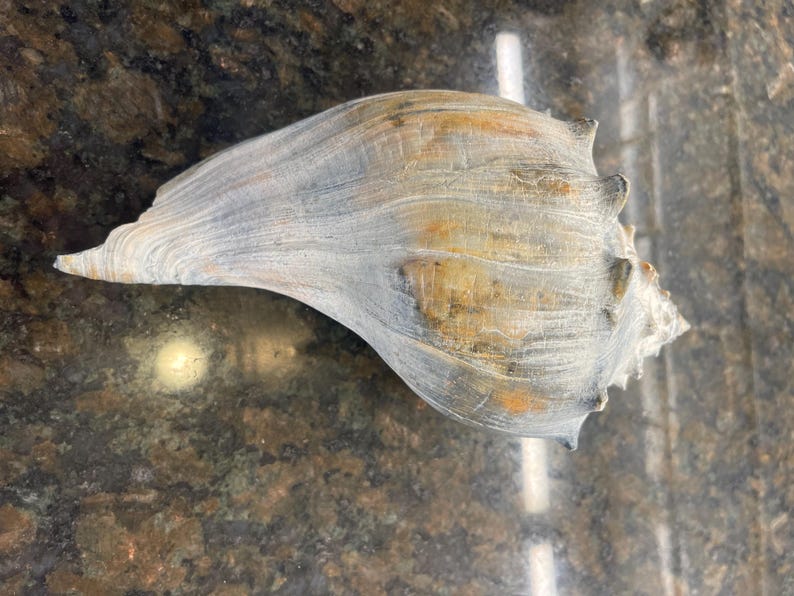
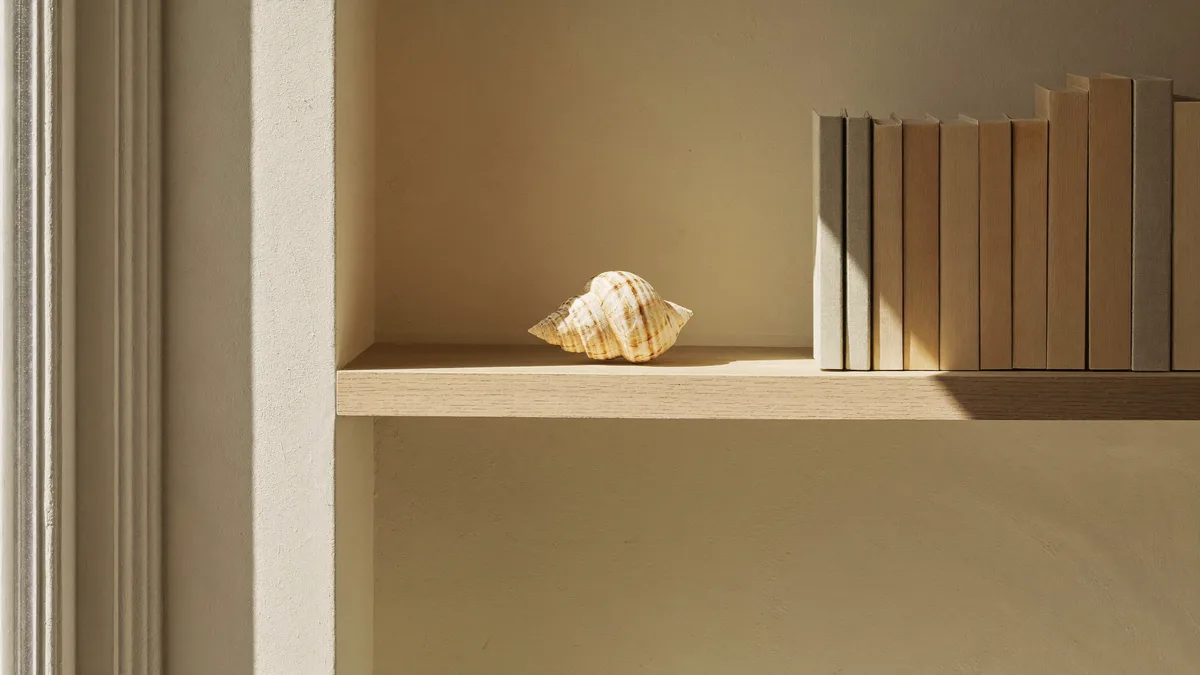
Look at the opening, the tip and the underside in the listing photos. Decide which side you want to face the room. If the display needs to sit upright, check how the shell rests before choosing it for that position.
The Shell Haul collection features listings named Atlantic Conch Shell and Atlantic Whelk Shell. Compare their photographs with your intended arrangement; use our whelk and conch photo checklist, then contact the shop if you need a precise identification.
Check the condition and the item you will receive
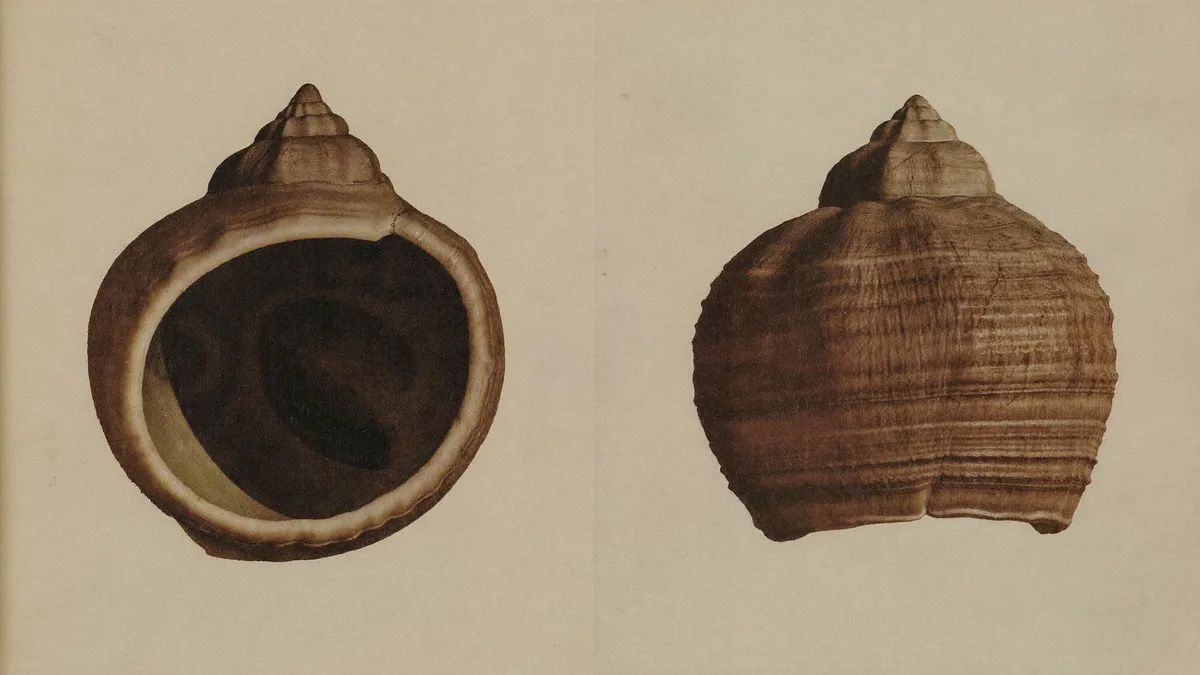
Read the description for notes about edges, marks or repairs. Zoom in on the photographs. Check whether the listing offers the exact photographed shell or a choice from similar pieces, especially if a particular color or pattern matters to you.
Condition words and the photos to request
Use these words to make a specific request about the exact shell you would receive. A photograph can leave part of an edge hidden, and a surface mark alone does not establish its cause. Record an unanswered question as “unknown.”
- Chip or missing edge
A chip is a missing piece. Ask for close photographs of the opening’s rim, the pointed tip and the lower end, with the whole shell visible in a separate image. Ask the seller to identify any missing areas; an uneven silhouette alone is not enough to classify one.
- Wear or surface marks
Ask about scratches, rubbed areas and changes in texture that matter to your display. Request a close view in even light and another from a different angle. Color variation, glare and fine lines do not by themselves establish wear or how it happened.
- Repair or added finish
Ask whether the shell has been glued, filled, coated or otherwise repaired, and which areas were treated. Request close views of any disclosed work. A photograph without an obvious join does not confirm that a shell is unrepaired.
Read the same shells from three angles
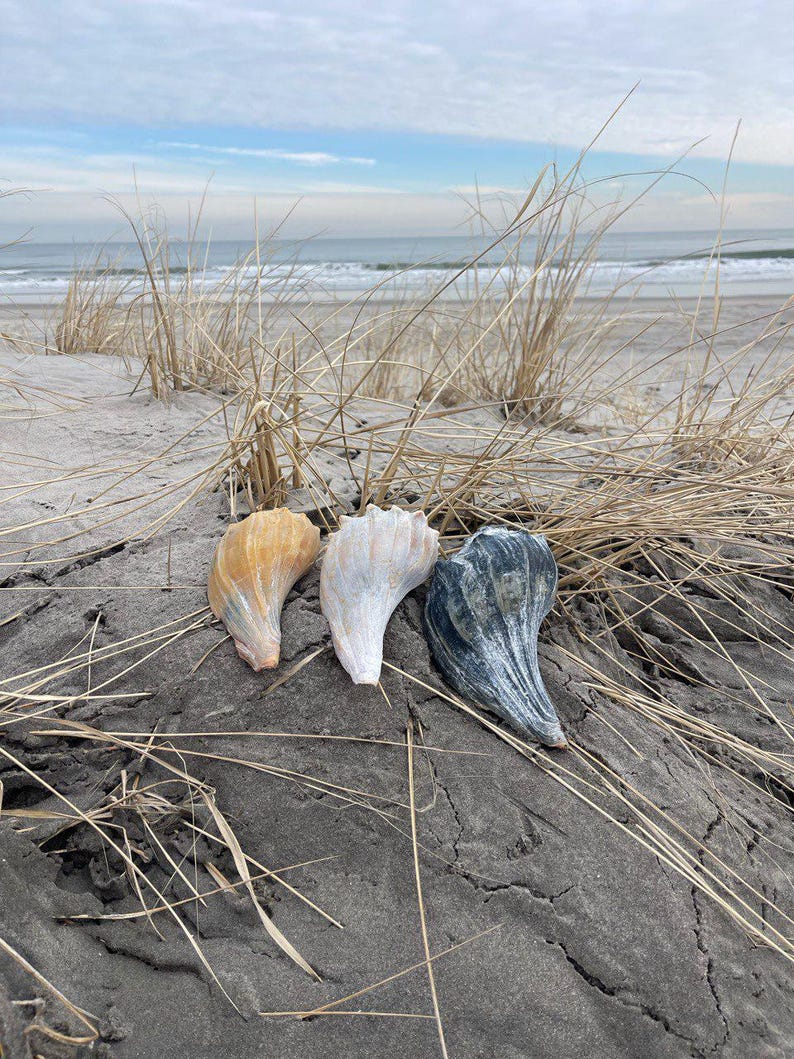
These original photographs come from ShellHaul’s channeled whelk listing on Etsy, checked October 22, 2026. The seller placed the A, B and C labels in the photographs. Use them to follow each shell as the view changes. The examples do not promise which individual shell a future order will contain.
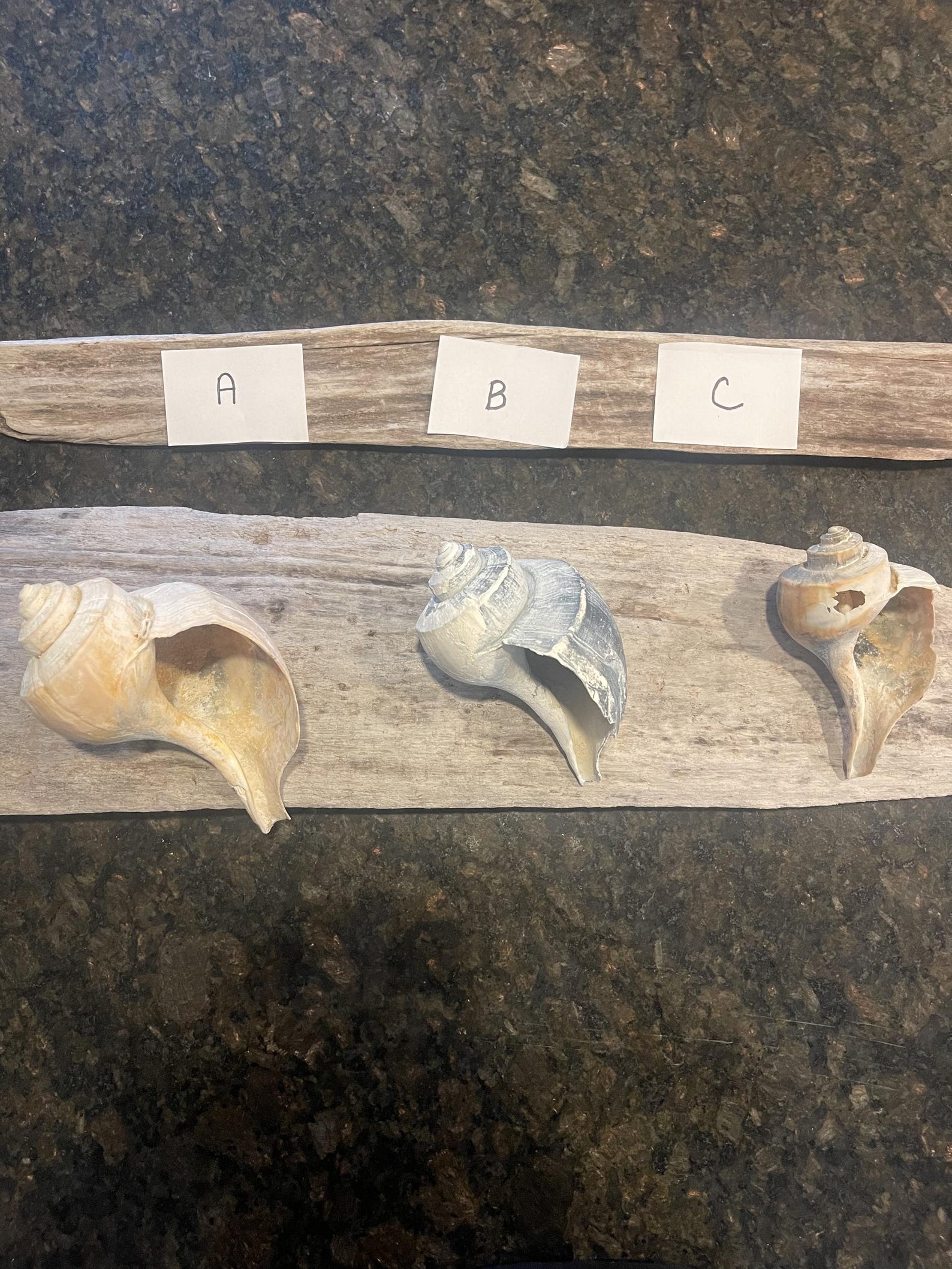
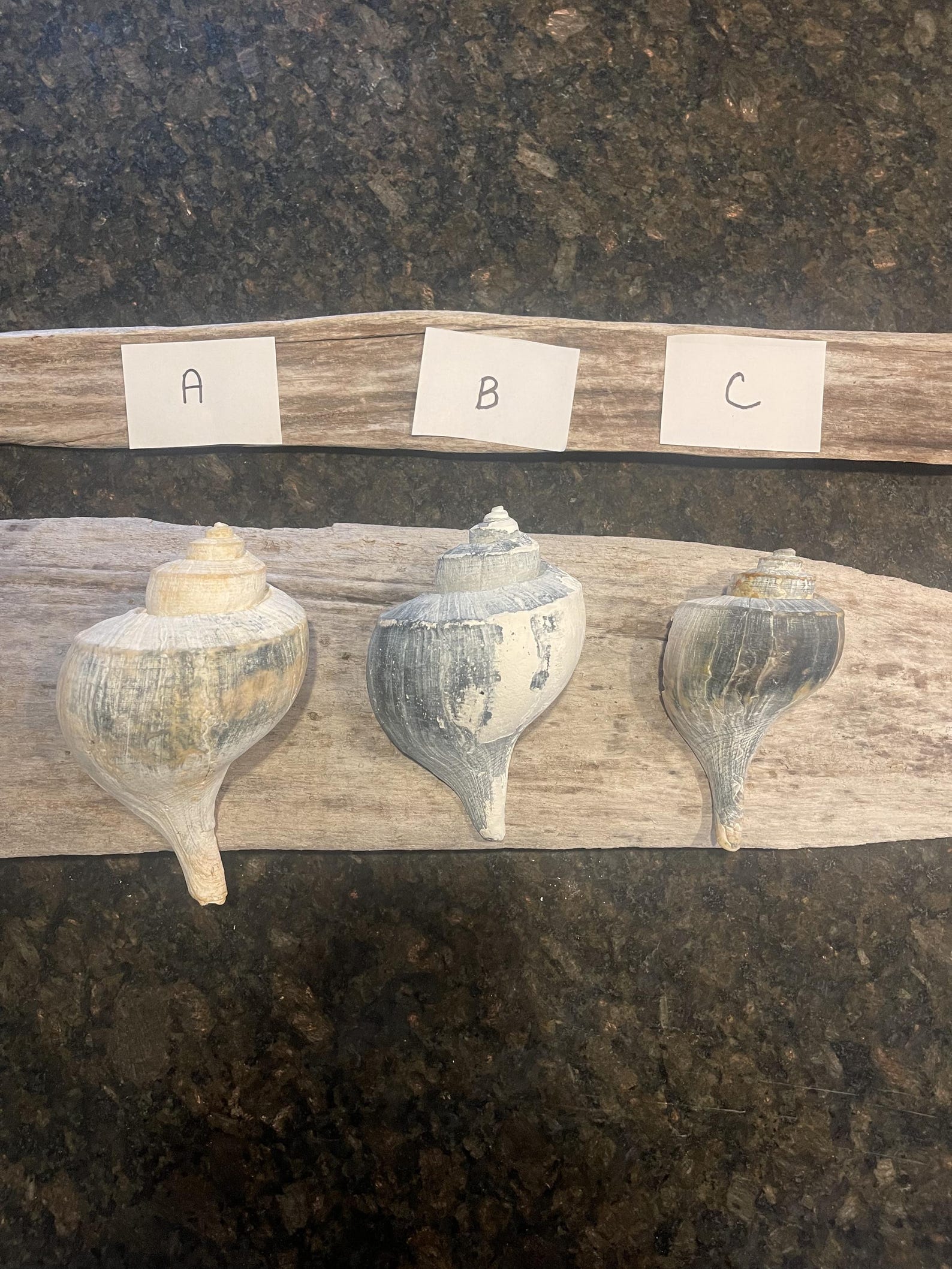
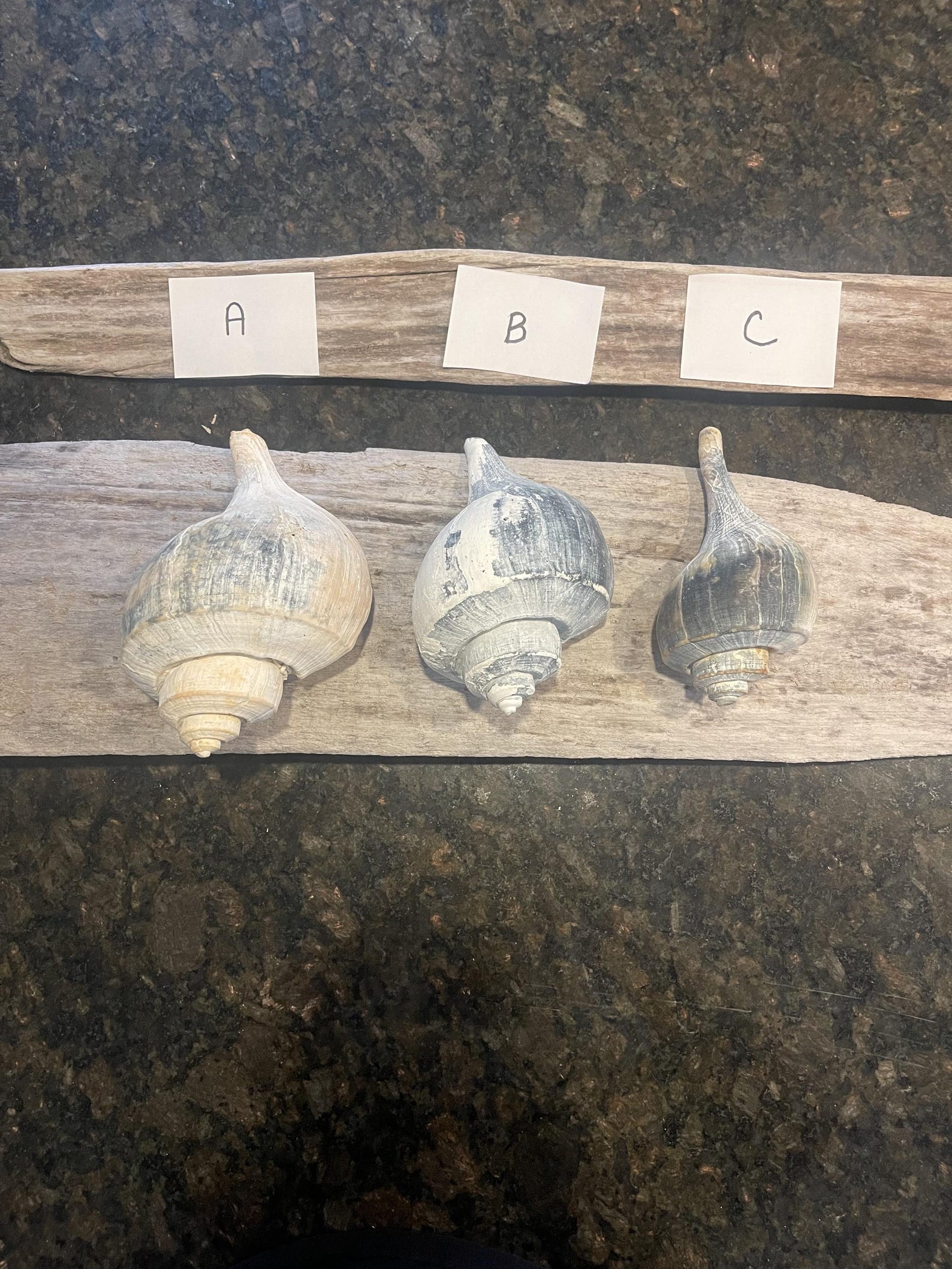
Read the seller’s grade description alongside the photos. At the October 22 check, the listing described A as premium with minimal visible wear or damage, B as allowing minor chips or edge wear, and C as allowing more noticeable weathering, chips or surface wear. These are that listing’s seller-defined grades, not a universal condition scale. Confirm the selected grade and exact item with the shop; the photographs do not supply a verified repair example.
Hello, I’m considering this listing: ___. Do the photos show the exact shell I would receive? Could you send a view into the opening, close views of the rim and both ends, and a photo of the side that will face the room? Please point out any chips, worn areas, repairs or added finishes and describe anything the photos don’t show. Thank you.
Check the name and collection history
ShellHaul uses listing names including “Atlantic Conch Shell” and “Atlantic Whelk Shell.” These are the listing names used on this site. They do not establish a scientific identification or a documented collection location.
This guide does not provide collection records for those shells. Treat their original location, collection date and collection method as unknown unless the seller supplies supporting details. A seller’s address, a photograph or the word “Atlantic” in a title does not fill those gaps. Do not infer “sustainably collected” from appearance.
If origin matters to your purchase, ask: “Where and when was this exact shell collected, how was it obtained, and what records support that information?” For identification, use the whelk and conch photo checklist to gather the views needed for a more precise question. Keep the seller’s response with the listing details before deciding.
Before you check out
- Confirm the dimensions and the selected option.
- Read the item description alongside the photographs.
- Check delivery information for your destination and the seller’s return terms.
- Ask the shop about anything that would change your choice.
Current availability and checkout are on Etsy.
Browse Shell Haul on Etsy ↗Choosing a shell candle as a gift
For an actual example, see our Black Knobbed Whelk Shell Candle notes, with two original listing photographs and seller-described materials checked October 22, 2026. Confirm the materials and any scent options with the seller, and read the supplied use and care instructions before lighting it. For a gift, check delivery timing at Etsy checkout.
Browse current ShellHaul listings on Etsy ↗
Already have a spot in mind? See our ideas for decorating with seashells or return to the Shell Haul collection.